 By Elena Mercer
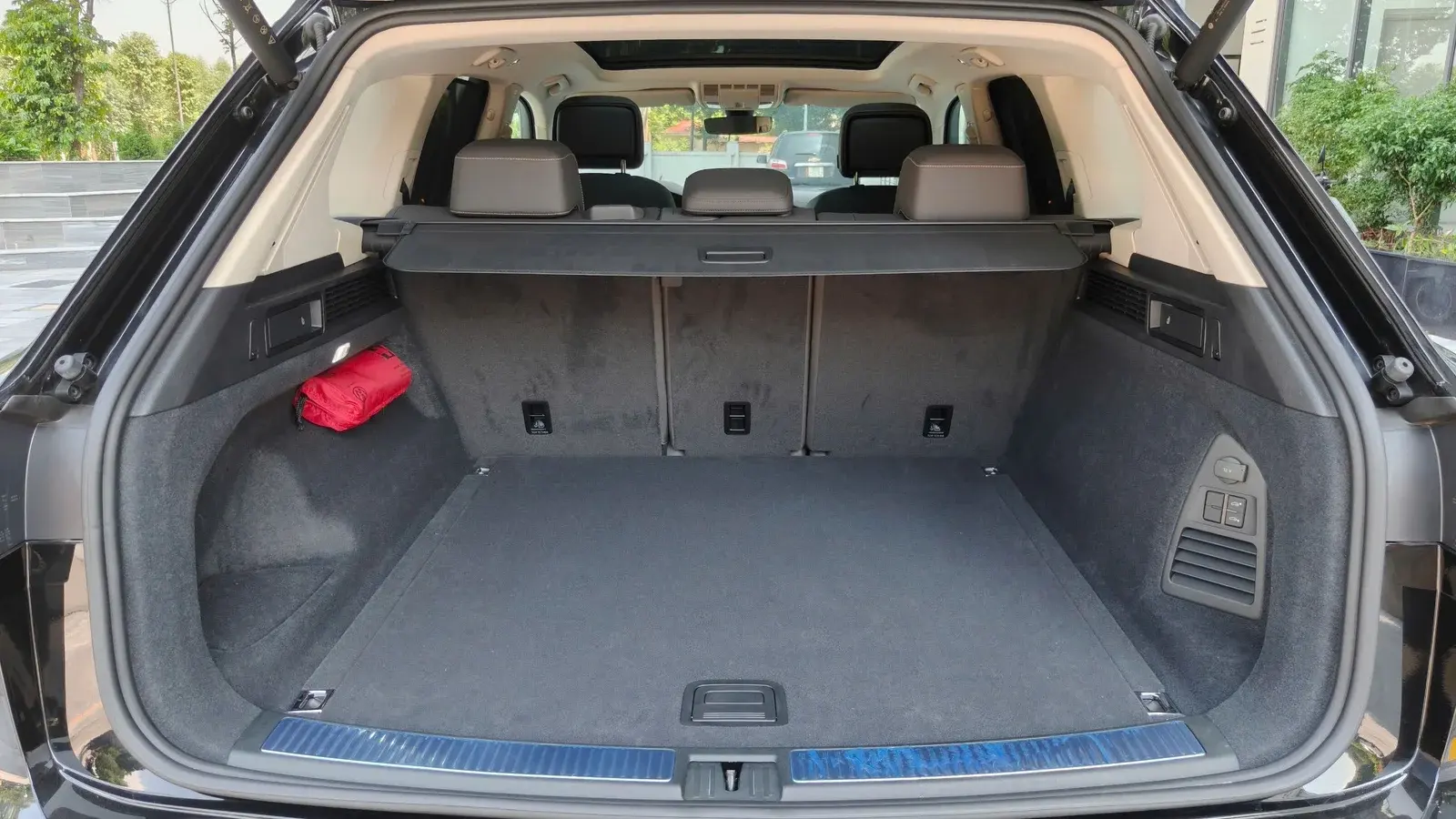
A small SUV mobile detailing setup passes two checks. The total load stays at or under the door-label limit. The kit fits the cargo floor with the rear seats up. The 2026 Honda CR-V owner's manual lists 850 pounds, and that figure includes every occupant.
That budget covers a driver, a small water tank or jugs, and a compact kit. It does not cover a van-size tank. The checks below use maker figures, a hypothetical load, and a worksheet you can fill in for your own SUV.
Compact SUV load limits from the makers
The maker's load figure is the starting line item. Honda's manual says its figure includes all occupants, cargo, and accessories. Treat every maker figure the same way until the manual says otherwise.
| SUV | Maker load figure | What the figure covers |
|---|---|---|
| 2026 Honda CR-V | 850 lb (owner's manual) | All occupants, cargo, accessories, and trailer tongue load |
| 2025 Ford Bronco Sport | 912 to 934 lb by engine and package (Ford spec sheet) | Payload for each listed configuration |
| 2026 Subaru Forester | No payload figure in Subaru's spec sheet | Read the label on your vehicle |
Ford's 2025 sheet lists 912 pounds for the standard 1.5L trims and 934 pounds with the Sasquatch package. The 2.0L Badlands lists 917 pounds, or 914 with Sasquatch.
Your exact vehicle governs. Trim, options, and added accessories change the figure. Read the Tire and Loading Information label on the driver's door jamb, and use that number on the worksheet.
Payload check for a small SUV
Federal rules require owner's manuals to print the same load steps. Find the statement "The combined weight of occupants and cargo should never exceed" on the placard. Subtract the driver and passengers. What remains is the cargo budget.
A load passes when every carried item fits inside that cargo budget.
- Pass: occupants plus water, tank, equipment, and supplies are at or under the label figure.
- Fail: the total is over the label figure. Cut the planned water first, then remove equipment you can leave at home. Rerun the check.
Honda's manual adds a second limit. The loaded vehicle must also stay within the gross vehicle weight rating and each gross axle weight rating on the door-jamb label. A load under the payload figure can still put too much on the rear axle. When the plan is close, weigh the loaded SUV at a scale that reads each axle.
Water spends the budget fastest
USGS puts one U.S. gallon of water at about 8.34 pounds. In the worked example below, water is the largest cargo line.
| Planned water | Weight | Share of an 850 lb label |
|---|---|---|
| 10 US gal | 83.4 lb | 9.8% |
| 20 US gal | 166.8 lb | 19.6% |
| 30 US gal | 250.2 lb | 29.4% |
| 40 US gal | 333.6 lb | 39.2% |
The formula is gallons x 8.34 = pounds. Add the empty tank, pump, mount, and hose separately. The water tank planner does the gallons-to-pounds step and compares the total with your label. The water tank size guide covers sizing from measured use.
Plan the tank from measured water per job, then jobs between refills. Where the customer's tap or a rinseless method covers the job, carry less water or no tank.
Worked example: one operator in a compact SUV (hypothetical)
Inputs: an 850-pound label figure, one 180-pound driver, and a 25-gallon tank filled to 20 gallons. The cargo budget is 850 - 180 = 670 pounds. Every weight below is hypothetical. Replace each one with a label, a manual figure, or a scale reading.
| Load item | Hypothetical weight (lb) |
|---|---|
| Driver | 180 |
| Planned water: 20 US gal x 8.34 | 166.8 |
| Empty tank, pump, and mount | 30 |
| Extractor | 30 |
| Vacuum | 15 |
| Battery power station | 45 |
| Bottles, towels, and pads | 60 |
| Hose, reel, and fittings | 25 |
| Crates and straps | 20 |
| Total | 571.8 |
- Total load: 180 + 166.8 + 30 + 30 + 15 + 45 + 60 + 25 + 20 = 571.8 lb.
- Cargo total without the driver: 571.8 - 180 = 391.8 lb.
- Margin: 670 - 391.8 = 278.2 lb.
Result: the payload check passes with a 278.2-pound margin. That margin is a reserve for recovered water, a full tank on a long route, or a second bag of supplies.
Scenario range
Run the same check at a low, base, and high case. All three are hypothetical.
| Line | Low: interior only | Base: one operator, 20 gal | High: two people, 40 gal |
|---|---|---|---|
| People | 180 | 180 | 350 |
| Water | 0 | 166.8 | 333.6 |
| Empty tank and mount | 0 | 30 | 40 |
| Equipment and supplies | 170 | 195 | 195 |
| Total (lb) | 350 | 571.8 | 918.6 |
| Against 850 lb | Passes by 500 | Passes by 278.2 | Fails by 68.6 |
The low case passes with room to spare. An interior-only service needs no tank, so the SUV carries mostly machines and supplies.
The base case passes. Keep the fill at 20 gallons and log real water use for 4 to 8 jobs.
The high case fails. Each 10 gallons removed saves 83.4 pounds. A 30-gallon fill gives 835.2 pounds, a margin of only 14.8 pounds. Leave the helper behind on wash days instead. If you use the 30-gallon fill, weigh each axle at a scale first. Rerun the check.
Space check with the rear seats up
Measure the cargo floor with the rear seats up, because a helper or a child seat may need them. Subaru and Ford publish these cargo dimensions for two compact SUVs. Other trims differ. The Forester Wilderness liftover is 29.5 inches. Other Bronco Sport versions list 34.1 or 33.7 inches of floor length.
| Measurement | 2026 Subaru Forester | 2025 Ford Bronco Sport (1.5L, standard) |
|---|---|---|
| Floor length, seats up | 36.5 in | 35.6 in |
| Width between wheel housings | 43.3 in | 41.4 in |
| Rear opening width, lower | 47.5 in | 42.6 in |
| Rear opening height | 32.2 in | 32.6 in |
| Liftover height | 28.9 in | 29.4 in |
A footprint passes when it fits inside the floor length and the width between wheel housings, and clears the rear opening. Leave working room to reach the shutoff and hose.
Take a hypothetical 28-by-18-inch tank, 12 inches tall, which holds about 26 gallons by volume. Place it across the floor against the seatbacks. In the Forester, 43.3 - 28 = 15.3 inches stay open beside it. Behind it, 36.5 - 18 = 18.5 inches of floor remain.
A hypothetical 24-by-16-inch extractor fits that 18.5-inch strip. In the Bronco Sport, the same tank leaves 13.4 inches beside it and 17.6 inches behind. The extractor still fits, with less room to lift it out.
The tank and extractor pass on paper. Place the vacuum, power station, bins, and hose reel in the leftover floor the same way. If any item has no secured spot with the liftgate closed, the layout fails. Lower the tank size or leave that item at home, then rerun the check.
Then build a dry mock-up with boxes of the same size. Close the liftgate on the full mock-up. Shop for the tank second.
The liftover height is close to 29 inches on both. A filled 20-gallon tank weighs 166.8 pounds before the tank itself. Load the tank empty, secure it to rated anchors (see the tie-down check below), and fill it in place.
Secure the load in a shared cabin
An SUV cargo area shares space and air with the driver. Every item needs a fixed travel position.
- Strap the tank and heavy machines to the cargo tie-down points named in the owner's manual. Follow the strap maker's ratings and the tank maker's mounting instructions.
- Keep the tank low and against the rear seatbacks. Check the axle rating on the door label with the full load.
- Store chemicals closed and upright in a crate. Follow each label and safety data sheet for storage and temperature.
- Keep clean towels in a sealed bin. Put wet and dirty towels in a separate lidded bin.
- Keep the rear view, seat belts, and the liftgate release clear.
The tie-down check needs a manual rating for each anchor used. That rating must cover the filled tank plus its mount.
- Pass: the anchor rating covers the filled tank, the mount, and the straps.
- Fail: the manual lists no rating, or the rating is too low. Carry water in smaller secured jugs or lower the fill. Rerun the check.
In a small SUV, power can come from the customer's outlet or a battery power station. A fuel generator adds fuel and exhaust to plan for. Follow its manual for transport and fuel storage. CPSC says to run it outdoors only, at least 20 feet from homes and buildings. Point its exhaust away from windows, doors, and vents. Never run it in the SUV.
The power planner adds running and starting watts for the tools that run together. Size the power station from that total.
Plan the wash water
EPA guidance warns that vehicle wash water can carry pollutants into storm drains. Local rules can restrict commercial discharge. Ask the local stormwater or sewer authority where your wash water may go, and record the answer.
A small SUV has little room for recovered water. A rinseless or waterless method lowers both the water load and the runoff. A capture mat and a recovery tank add weight, so add them to the worksheet.
When the SUV fails the check
A fail tells you which line to move. Lower the planned water first, then remove gear, then drop a passenger on wash days. Rerun the check after each change.
If the plan still fails at the water you need, compare a larger vehicle with the same worksheet. A mobile detailing truck setup page lists pickups with more payload than the CR-V and Bronco Sport. The tank also rides outside the cabin. A trailer setup adds its own weight limits and a tongue load, which counts against the SUV's figure. Check the SUV's tow rating in its manual. A van setup has its own payload and layout checks. The mobile car wash setup page compares the van, trailer, truck bed, and car trunk layouts.
Run the check on your numbers
Read the door-jamb label today. Write the figure on the SUV load and space worksheet, subtract the people, and add every carried item. Enter your tank size in the water tank planner. Build the gear list from the mobile detailing equipment list. If the total fails, move one line and rerun the check.
Sources
- Maximum Load Limit | CR-V 2026 | Honda — American Honda Motor Co.. Checked 2026-11-01. 2026 CR-V maximum load of 850 lbs including occupants, cargo, accessories and tongue load; GVWR and GAWR on the doorjamb label; the load-limit steps.
- 2025 Ford Bronco Sport Technical Specifications — Ford Motor Company. Checked 2026-11-01. Payload 912 (std) / 934 for 1.5L and 917 (std) / 914 for 2.0L; cargo length, wheelhouse width, rear opening and lift-in height.
- 2026 Subaru Forester Specifications — Subaru of America. Checked 2026-11-01. Cargo load length at floor, width between wheel housings, rear gate opening, liftover height; the sheet lists no payload figure.
- 49 CFR 575.6 Requirements — Electronic Code of Federal Regulations. Checked 2026-11-01. Required owner's manual steps for determining the correct load limit from the placard.
- A Million Gallons of Water – How Much Is It? — U.S. Geological Survey. Checked 2026-11-01. Approximate 8.34 pounds per U.S. gallon of water.
- CPSC Warns of Generator, Carbon Monoxide and Fire Hazards Ahead of Hurricane Season — U.S. Consumer Product Safety Commission. Checked 2026-11-01. Operate generators outdoors only, at least 20 feet from homes and buildings, exhaust away from windows, doors and vents; never in enclosed areas.
- Stormwater Best Management Practice: Vehicle Maintenance and Washing — U.S. Environmental Protection Agency. Checked 2026-11-01. Wash water pollutants, storm drains, and local restrictions on commercial wash-water discharge.

About Elena Mercer
Elena brings nine years of detailing experience to guides on equipment, pricing, and starting a business.
Meet Elena and read her guides