 By Elena Mercer
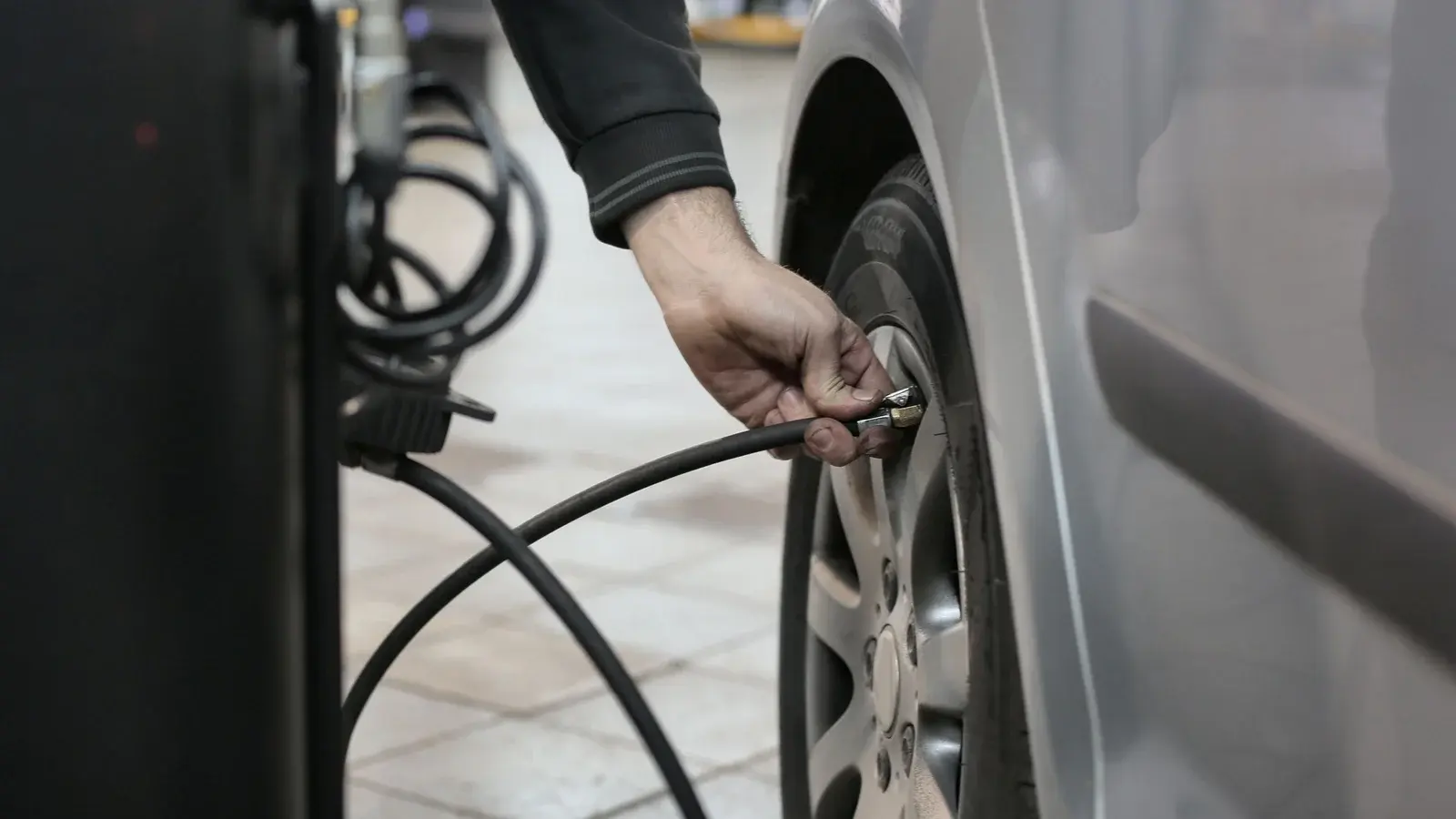
Pick the air tool first. A compressor fits a detailing kit when its delivered airflow at the tool's pressure covers the tool's air use. Tank size does not set airflow.
The Tornador Z-014 is an air blow out tool. On its maker's 5 CFM figure, the California Air Tools 10020C passes the airflow check. Its pump is oil-free. The California Air Tools 8010 fails it. The Makita MAC5200 passes with more margin, but its pump uses oil, so the air needs filtering.
Detail Compass has not tested any of these tools. Figures come from the makers' manuals and product pages, checked October 30, 2026. For the order of interior work, see the interior reset guide.
Terms on the spec sheet
Four terms decide the match. Use each one exactly as the maker prints it.
- CFM or SCFM is airflow, in cubic feet per minute. Makita prints SCFM, which it defines as standard cubic feet per minute of air delivery. California Air Tools prints CFM.
- PSI is pressure, in pounds per square inch. A compressor's airflow falls as pressure rises, so every CFM figure needs its PSI.
- Duty cycle is the share of time the pump may run. Makita sets 50% of one hour. California Air Tools prints 70/30 and describes it as intermittent use during a standard work day.
- Cut-in and cut-out pressure are the tank pressures where the motor starts and stops.
Compare airflow at the same pressure on both sides. Use the compressor's figure at 90 PSI. The makers do not say whether their CFM and SCFM figures share a test basis. A small margin is a weak pass.
Start with the tool's air requirement
The tool sets the target. Tornador lists three numbers for the Z-014 across two documents.
- The Z-014 instruction sheet says to set the regulator at 60 to 90 PSI and not to exceed 90 PSI.
- The same sheet asks for a constant minimum air pressure of 50 to 90 PSI.
- The product page says the Z-014 works with a compressor operating between 60 and 90 PSI. It adds that Tornador car cleaning tools work best with 5 CFM, or at least 85 PSI.
The pressure floors disagree: 50, 60, and 85 PSI. Tornador gives no pressure for the 5 CFM figure. The tool can run at up to 90 PSI, so compare it with each compressor's airflow at 90 PSI.
Treat 5.0 CFM as the base case. Add a stress case 20% higher, 6.0 CFM, which is hypothetical. If a compressor fails only the stress case, it has a thin margin.
Verification step: ask Tornador for the Z-014's airflow at the regulator setting you plan to use. Record the answer and its date on the match record.
Three compressors from their maker pages
All three run on 120 V household power. Each line below comes from the maker's own page or manual.
| Line | California Air Tools 8010 | California Air Tools 10020C | Makita MAC5200 |
|---|---|---|---|
| Pump | Oil-free | Oil-free | Oil-lubricated |
| Airflow at 90 PSI | 2.20 CFM | 5.30 CFM | 6.5 SCFM |
| Tank | 8.0 gallons | 10 gallons | 5.2 gallons |
| Pump stops (cut-out) | 120 PSI, plus or minus 5 (manual) | 120 PSI, plus or minus 5 (manual); the product page lists 125 PSI maximum | 140 PSI |
| Pump restarts (cut-in) | 90 PSI, plus or minus 5 (manual) | Manual lists 90 to 120 PSI working pressure | 110 PSI |
| Amps | 8.5 amps | 14 amps | 13.8 amps at maximum pressure |
| Power rule | Generator 2,500 running watts minimum | Dedicated 15 amp outlet; 5,500 watt generator minimum | 15 amp circuit minimum; no generator minimum in the manual |
| Duty cycle | 70/30; no more than 60 minutes of continuous running (manual) | 70/30; no more than 60 minutes of continuous running (manual) | 50% of one hour |
| Noise listed | 60 dB | 70 dB | Not listed in the manual |
| Weight | 48 lb | 82.5 lb | 88 lb net |
| Price checked October 30, 2026 | $240.00 at californiaairtools.com | $457.00 at californiaairtools.com | No price on makitatools.com; record your quote |
Add the compressor's weight to your load. Run the payload check in the van setup guide.
Airflow check
A compressor passes when its airflow at 90 PSI is at or above the tool's CFM.
- Pass: compressor CFM at 90 PSI minus tool CFM is zero or more.
- Fail: the result is below zero. Choose a compressor with more airflow at 90 PSI, then rerun the check.
| Compressor | Base case: 5.0 CFM tool | Stress case: 6.0 CFM tool (hypothetical) |
|---|---|---|
| CAT 8010 | 2.20 - 5.0 = -2.80. Fails. | 2.20 - 6.0 = -3.80. Fails. |
| CAT 10020C | 5.30 - 5.0 = 0.30. Passes. | 5.30 - 6.0 = -0.70. Fails. |
| Makita MAC5200 | 6.5 - 5.0 = 1.5. Passes. | 6.5 - 6.0 = 0.5. Passes. |
The 8010 fails both cases. The 10020C passes on the maker's figure and fails the stress case. The MAC5200 passes both.
Tank time when the tool outruns the pump
A tank stores air for short bursts. It cannot make up a steady shortfall. The calculation below shows how long a full tank holds the tool's pressure.
The pump stays off until the tank falls to the cut-in pressure. Above cut-in, the tank alone feeds the tool. Below cut-in, the pump helps, and only the shortfall drains the tank.
The U.S. Department of Energy compressed air sourcebook gives a receiver formula. Solved for time, it becomes two stages:
- Stage 1, pump off: minutes = tank cubic feet x (cut-out PSI - cut-in PSI) / (14.7 x tool CFM)
- Stage 2, pump on: minutes = tank cubic feet x (cut-in PSI - end PSI) / (14.7 x (tool CFM - compressor CFM))
- Tank cubic feet = gallons x 0.1336806 (NIST conversion)
Skip stage 2 when the compressor CFM is at or above the tool CFM. The tank then stops falling. The sourcebook uses 14.7 for atmospheric pressure in PSI and assumes ambient temperature. Treat each result as an estimate.
The end PSI is your regulator setting. The Z-014 range runs from 60 to 90 PSI, so the examples use both ends. The 8010 manual restarts the pump at 90 PSI. The 10020C manual gives 90 to 120 PSI as its working pressure. That leaves no stage 2 above a 90 PSI setting.
CAT 8010, base case: 5.0 CFM tool
- Tank: 8.0 x 0.1336806 = 1.07 cubic feet.
- Stage 1: 1.07 x (120 - 90) / (14.7 x 5.0) = 0.44 minutes, about 26 seconds.
- Stage 2 to 60 PSI: 1.07 x (90 - 60) / (14.7 x (5.0 - 2.20)) = 0.78 minutes, about 47 seconds.
- Total to 60 PSI: 0.44 + 0.78 = 1.22 minutes.
Set at 90 PSI, the 8010 holds the tool's pressure for about 26 seconds. After that, the tool gets only the pump's airflow.
CAT 10020C, stress case: 6.0 CFM tool (hypothetical)
- Tank: 10 x 0.1336806 = 1.34 cubic feet.
- Stage 1: 1.34 x (120 - 90) / (14.7 x 6.0) = 0.46 minutes, about 27 seconds.
- Stage 2 to 60 PSI: 1.34 x (90 - 60) / (14.7 x (6.0 - 5.30)) = 3.91 minutes.
- Total to 60 PSI: 0.46 + 3.91 = 4.37 minutes.
In the base case, the 10020C pump keeps up below cut-in. Cut-in can be as low as 85 PSI, so set the regulator a few PSI below that. In the stress case, set the regulator lower to gain time. If your jobs need long continuous blasts, choose more airflow.
Run time check
Duty cycle limits how long the pump may run. Average demand sets how hard it works.
- Average demand = tool CFM x share of time the trigger is held
- Pump minutes = session minutes x average demand / compressor CFM at 90 PSI
Hypothetical inputs: a 40-minute interior blow-out with the trigger held 40% of the time. Average demand is 6.0 x 0.40 = 2.4 CFM in the stress case.
- Makita MAC5200: 40 x 2.4 / 6.5 = 14.8 pump minutes, a 37% share. The 50% rule passes.
- CAT 10020C: 40 x 2.4 / 5.30 = 18.1 pump minutes, a 45% share. The 70/30 rule passes.
- CAT 8010: the airflow check already failed. Stop here.
California Air Tools also lists limits for its 2 hp models at 90 PSI. They may run at 3.0 CFM for up to 1 hour, and at up to 5.0 CFM for 30 minutes at most. Its manual caps continuous running at 60 minutes.
The 18.1 pump minutes in the example stay under the 30-minute limit. A longer session at full trigger use would not. The CAT pages give no rest period, so ask California Air Tools and record the answer.
California Air Tools also advises doubling a tool's CFM for continuous use. A 5.0 CFM tool held open for more than 1 hour a day needs 10.0 CFM. All three compressors fail that case.
- Pass: pump share is at or under the maker's duty rule, and no continuous run exceeds the maker's time limit.
- Fail: either limit is exceeded. Shorten the bursts, split the session, or choose more airflow. Rerun the check.
Power check
The compressor's amps go on the same line as every other tool on that circuit. The makers set the limits below.
- CAT 10020C: 14 amps, a dedicated 15 amp outlet, a 14 gauge, 25 ft cord, and a 5,500 watt generator minimum.
- Makita MAC5200: 13.8 amps at maximum pressure on a 15 amp circuit minimum. Makita says to use extra air hose instead of an extension cord. The manual lists no generator minimum, so ask Makita.
- CAT 8010: 8.5 amps and a 2,500 running watt generator minimum.
If an extension cord cannot be avoided, the Makita manual sets the minimum gauge. For 12 to 14 amps, it lists 16 AWG at 25 feet. It lists 12 AWG at 50 feet and 10 AWG at 100 feet.
At a customer's home, ask which outlet sits on a circuit with nothing else running. For generator work, run the generator checks and add each tool in the power calculator.
- Pass: the outlet or generator meets the maker's rule with every tool on it counted.
- Fail: the circuit is shared, the cord is too thin or too long, or the generator is smaller than the minimum. Move the compressor closer and add air hose, or change the power source. Rerun the check.
Hose and regulator check
A long or narrow air line lowers the pressure that reaches the tool. Makita warns that piping that is too small restricts airflow.
Makita says to adjust the regulated pressure under flow, while the tool is in use. The regulator gauge sits at the compressor, so it does not show the loss along the hose.
Measure at the tool instead. Fit an inline gauge between the hose end and the Z-014. Hold the trigger and read it.
- Pass: the gauge at the tool holds your chosen setting, from 60 to 90 PSI, on the full hose length.
- Fail: the reading falls below your chosen setting or below 60 PSI. Use a shorter or wider hose, or more airflow. Rerun the check.
Record the hose inside diameter and length on the match record. Both California Air Tools manuals use 1/4 inch industrial quick connectors.
Clean air check
Tornador's sheet says to keep the tank and air lines free from oil and water contamination. Detailing air reaches seats, carpet, and fresh paint, so this check matters.
- Oil-free pump: both California Air Tools models. California Air Tools sells a water and oil separator filter as an add-on.
- Oil-lubricated pump: the Makita MAC5200. Makita says to use separate air transformers for moisture and dirt removal where applicable. Add an oil and water separator for detailing air.
- Tank water: Makita warns that undrained water rusts the tank and can lead to a violent tank explosion. Drain the tank as the manual directs.
- Pass: the line has a water separator, an oil separator for an oiled pump, and a drain routine on the job ticket.
- Fail: any part is missing. Add the filter or the drain step, then rerun the check.
Safe use check
Compressed air can injure people. Makita says the air stream can cause soft tissue damage and can throw dirt and small objects at high speed.
- Wear eye and hearing protection. Tornador and Makita both call for eye protection; Tornador also names hearing protection.
- Never point the tool at a face, a body, people, or animals.
- Turn off the compressor and bleed the line before you change a tool or fitting, as the Makita manual directs.
- Do not exceed 90 PSI at the Z-014.
If anyone works for you, OSHA rules apply. OSHA standard 1910.242(b) bans compressed air for cleaning unless it is reduced to less than 30 PSI. It also requires effective chip guarding and personal protective equipment.
The Z-014 sheet calls for 60 to 90 PSI and does not address that rule. An employer needs a written answer from Tornador or a safety professional on how the tool meets it. Until then, the safe use check fails for employees.
Worked example: one interior blow-out setup (hypothetical)
Inputs: a solo owner, the Z-014, and the CAT 10020C. Hose, separator, and coupler prices are hypothetical. The setup-cash limit is $700, also hypothetical.
| Line | Amount |
|---|---|
| CAT 10020C compressor | $457.00 (list, October 30, 2026) |
| Tornador Z-014 | $67.95 (list, October 30, 2026; backordered that day; free shipping only over $100) |
| 25 ft air hose | $35.00 (hypothetical) |
| Water and oil separator filter | $45.00 (hypothetical) |
| Couplers, plugs, and an inline gauge | $15.00 (hypothetical) |
- Setup cash: $457.00 + $67.95 + $35.00 + $45.00 + $15.00 = $619.95.
- Cash margin: $700.00 - $619.95 = $80.05. The cash check passes, before tax and shipping.
- Airflow: 5.30 - 5.0 = 0.30 CFM. Passes the base case; fails the stress case by 0.70 CFM.
- Tank time in the stress case: about 27 seconds at a 90 PSI setting, and 4.37 minutes down to 60 PSI.
- Run time: 18.1 pump minutes in 40 minutes. Passes the 70/30 rule and the 30-minute limit at 5.0 CFM.
- Power: passes only at sites with a dedicated 15 amp outlet.
Result: the setup passes for short, paused bursts. It fails long continuous use. If continuous use matters, price the MAC5200 path with an oil separator and rerun the cash check.
California Air Tools lists no returns and a 60-day exchange on these product pages. Record the seller's return terms with each quote.
The Tornador product page does not state the inlet thread. Check the fitting on the tool, then buy couplers that match the compressor's quick connectors.
Compressor purchase check
A purchase passes when every check above passes for the same tool on the same day.
- Pass: airflow, run time, power, hose, clean air, safe use, and cash all pass. Every open spec has a dated maker answer.
- Fail: any check fails or any spec is missing. Get the missing answer or change one model, then rerun all checks.
What size air compressor do I need for detailing?
Size it by airflow at the tool's pressure. Tornador says its car cleaning tools work best with 5 CFM, so look for 5 CFM or more at 90 PSI. The CAT 10020C lists 5.30 CFM at 90 PSI. Tank gallons only set burst time.
Run the check on your numbers
Download the air compressor match record. Enter the tool's CFM and PSI from its maker, then each compressor's figures from its manual. Run the seven checks and record each result with its date.
Add the compressor to your service kit list in the equipment list guide only after the purchase check passes.
Sources
- Z-014 Tornador Air Blow Out Tool — Tornador (ECP Inc.). Checked 2026-10-30. Works with a compressor operating between 60 and 90 psi; Tornador car cleaning tools work best with a compressor that produces 5 CFM, or at least 85 psi; free U.S. shipping only on orders over $100; eye and ear protection; $67.95 list price and backorder notice on October 30, 2026; no inlet thread stated.
- Z-014 Tornador Air Blow Out Tool instruction sheet — Tornador (ECP Inc.). Checked 2026-10-30. Regulator setting 60 to 90 psi; do not exceed 90 psi; constant minimum air pressure of 50 to 90 psi; tank and air lines free from oil and water contamination; hearing and eye protection; do not point at face or body; 90-day limited warranty.
- CALIFORNIA AIR TOOLS 8010 Ultra Quiet 8-Gallon Air Compressor — California Air Tools. Checked 2026-10-30. Oil-free; 8.0 gallon tank; 2.20 CFM at 90 PSI; 120 PSI maximum; 1/4 inch hose and 317 water and oil separator add-ons; no returns, 60-day exchange; 8.5 amps; 2,500 running watt generator minimum; 60 seconds recovery from 90 to 120 PSI; 70/30 duty cycle; 60 dB; 48 lb; $240.00 list price.
- CALIFORNIA AIR TOOLS 10020C Ultra Quiet Oil-Free 2.0 Hp 10 Gallon Air Compressor — California Air Tools. Checked 2026-10-30. Oil-free; 10 gallon tank; 5.30 CFM at 90 PSI; 125 PSI maximum; 14 amps; dedicated 15 amp outlet and 14 gauge 25 ft cord; 5,500 watt generator minimum; 70/30 duty cycle; 70 dB; 82.5 lb; water and oil separator add-on; no returns, 60-day exchange; $457.00 list price.
- California Air Tools 10020C owner's manual, Rev C — California Air Tools. Checked 2026-10-30. Pressure switch stops the pump at 120 PSI plus or minus 5; working pressure 90 to 120 PSI; no continuous running over 60 minutes; average 70/30 duty cycle; 1/4 inch industrial quick connectors; regulate with the tool running.
- California Air Tools 8010 owner's manual (2025-09-29) — California Air Tools. Checked 2026-10-30. Pressure switch stops the pump at 120 PSI and restarts it at 90 PSI, each plus or minus 5; 2.20 CFM at 90 PSI; 1/4 inch industrial quick connect; over 1 hour of continuous use can overheat the motor.
- Choosing the Right Air Compressor for You — California Air Tools. Checked 2026-10-30. 70/30 duty cycle means intermittent usage during a standard work day; multiply a tool's CFM by 2 for continuous use; 2 hp models may run at 3.0 cfm for up to 1 hour and up to 5.0 cfm for 30 minutes at 90 PSI.
- Owner's manual, oil lubricated air compressor model MAC5200 — Makita U.S.A.. Checked 2026-10-30. 6.5 SCFM at 90 PSIG; 110 PSI cut-in and 140 PSI cut-out; 13.8 amps at maximum pressure; 15 amp minimum circuit; 5.2 gallon tank; 50% duty cycle; SCFM definition; air hose instead of extension cord and the cord gauge table; air transformers for moisture and dirt removal; piping that is too small restricts airflow; adjust the regulated pressure under flow; tank drain and burst warning; safety glasses, never point at the body; bleed pressure before attaching tools.
- MAC5200 3.0 HP Air Compressor product details — Makita U.S.A.. Checked 2026-10-30. 88 lb net weight, oil-lubricated pump, 6.5 CFM at 90 PSI; no price listed on the maker page.
- Improving Compressed Air System Performance: A Sourcebook for Industry — U.S. Department of Energy and Compressed Air Challenge. Checked 2026-10-30. Receiver formula V = T x C x Pa / (P1 - P2), its ambient-temperature and no-compressor-supply assumptions, the substitution of C - S when the compressor runs; 14.7 used for atmospheric pressure in its leak formula.
- 29 CFR 1910.242, Hand and portable powered tools and equipment, general — Occupational Safety and Health Administration. Checked 2026-10-30. Compressed air shall not be used for cleaning except where reduced to less than 30 psi, and then only with effective chip guarding and personal protective equipment; employer responsibility for tools.
- NIST Handbook 133 (2026), Appendix E, units of measurement — National Institute of Standards and Technology. Checked 2026-10-30. 1 U.S. gallon = 0.133 680 6 cubic feet (231 cubic inches).

About Elena Mercer
Elena brings nine years of detailing experience to guides on equipment, pricing, and starting a business.
Meet Elena and read her guides