 By Elena Mercer
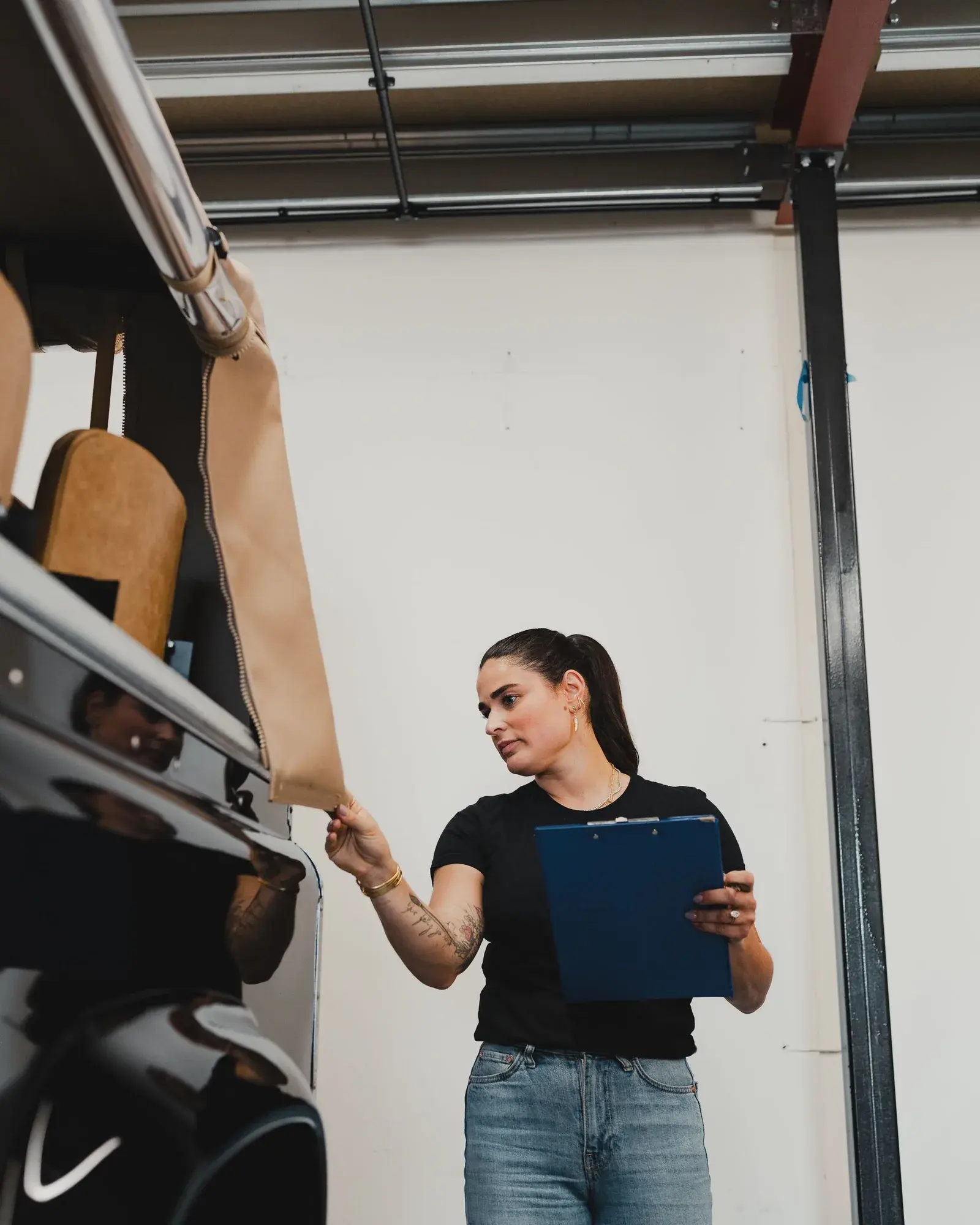
Before you accept a booking
Check registration, permits, insurance, tax, and wash-water rules first. Follow the business setup checks. Confirm the rules for each place you work.
Only accept work within your skills, equipment, and insurance. Do not learn a new repair or paint process on a paying customer's car.
1. Agree on the work
- Ask for the car's year, make, model, and photos that show its condition.
- Ask about pet hair, smoke, spills, stains, damage, and special finishes.
- List what the service includes and what costs extra. Do not guarantee stain or scratch removal.
- Confirm the address, parking, water, power, keys, and time needed.
- State payment, deposit, cancellation, and weather terms before the customer books.
Ask about paint protection film, window tint, wraps, and coatings. These can need special care or a wait before washing. Get the product's name and follow its maker's current instructions. For example, XPEL publishes care rules for its products.
2. Check the price
Count all your work time: cleaning, travel, setup, laundry, and messages. Add materials, travel costs, card fees, and a share of monthly bills.
Use the Pricing Calculator to find the minimum that covers those inputs and your pay target. Then open Menu & quote to make a customer quote. Check tax and confirm the car's condition before agreeing on the final price.
If you do not know a cleaner's cost per job, use the Cost-per-detail Calculator. Enter its bottle price, label mix ratio, and the amount you use.
3. Inspect the car on arrival
Park safely and keep access clear. Walk around with the customer when possible. Ask permission to photograph damage. Confirm valuables, child seats, keys, alarms, and areas that must not be cleaned.
If the car needs more work than agreed, stop. Explain the change and get approval for the work and price before you start.
4. Follow the job checklist
Open the Checklist Builder and choose Client detail. Read each product label. Use the required gloves, eye protection, and other safety equipment.
Keep wheel tools and dirty towels away from paint. Use cleaners approved for each surface. Stop if a surface reacts, damage appears, or you find work outside the agreed service.
Before returning the car, check glass, mirrors, handles, door edges, wheels, and drips in good light. Remove tools and waste. Keep pedals and controls free of slippery products.
5. Return the car and record the job
- Walk through the result with the customer. Show stains or marks that remain.
- Explain any drying or care steps. Give the maker's instructions for protection products.
- Collect payment as agreed and provide a receipt. Record any approved extra work.
- Write down the actual time, materials, travel costs, fees, and problems.
- Ask for an honest review after the customer checks the work. Do not write the review for them.
Use what you learned to update your next quote. Buy more equipment only when it solves a problem you have seen in your own work.
Turn the booking into a job ticket
Write the service name, vehicle, location, included areas, and excluded areas on one ticket. Add the agreed price or the condition that can change it. Send the same scope to the customer before the job. A verbal service name alone leaves too much open.
Use photos to identify condition when the customer permits them. Ask for images of the areas most likely to change the time or method. A photo can support a first quote, but inspection on arrival still decides whether the planned process is suitable.
Record the products or finishes that need special care. Ask for the installed film, coating, or tint name when possible. If the owner cannot identify it, hold that surface until the care rule is confirmed. Write the limit on the ticket.
Confirm access to water, power, parking, and a place for waste. Check local wash-water rules for the address. If the site cannot support the service, change the location or the job before travel. Put any travel or site charge on the quote.
Test the price against the actual scope
A minimum price starts with the time and direct costs for the named job. Include travel, setup, cleaning, laundry, messages, and handover in owner hours. Add payment fees and a share of fixed overhead. The pricing tool lets you test those inputs.
Use a range when condition is uncertain. Label the low, base, and high time cases as hypothetical until you measure them. Quote a starting scope you will actually perform at its stated price. Explain what finding on arrival would require a new quote.
For example, assume a hypothetical interior job takes 3 cleaning hours and 1 hour for travel, setup, and handover. The time input is 4 owner hours. If inspection adds 2 cleaning hours, the new total is 6 owner hours. Rerun the price before adding work.
Keep the customer price and your internal minimum on separate lines. A quote passes when it covers the agreed scope under your cost and pay assumptions. If it fails, adjust the service, time, or price. Do not hide unpaid owner hours in the estimate.
Plan a time buffer for inspection and handover. A service that fills every available hour leaves no room to review damage, dry the interior, or explain a remaining mark. If the booking window cannot hold those tasks, narrow the scope or offer another appointment.
Use one owner for each customer decision. Record the name of the person who approved access, photographs, extra work, and payment terms. For a business customer or shared vehicle, confirm who can approve a change. Do not infer permission from possession of the keys.
Check the site once more before unloading equipment. Keep public access and vehicle movement clear. Put tools and chemicals where they cannot be knocked into the car or a walkway. Follow the local site rules for water, waste, and noise.
Use a stop list during the job
Keep a stop list on the job ticket. Include unexpected chemical reaction, damaged finish, unknown material, biohazard, and a site rule you cannot meet. When a stop point appears, pause that area and contact the customer. The rest of the agreed service can continue only if it remains safe and clear.
Close the service with usable records
Review each promised area against the checklist. Inspect in suitable light and allow time for drips or residue to appear. Keep cleaning tools away from the customer’s controls during handover. Explain a remaining mark without claiming a repair that was never agreed.
Issue a receipt that matches the approved work and payment. Record product use, towel use, travel, fees, and actual owner hours. Keep the cost record separate from the customer’s personal details. Follow the applicable rules for storing records and photos.
After several comparable jobs, compare estimated and actual time. A repeated overrun means the next quote needs a different time input or narrower scope. Record the change and its date on the price sheet.
Restock the kit after recording what was used. Check for damaged tools and towels. The next booking should start with a complete service kit and a quote informed by this job’s measured time.
Keep a separate line for work declined or deferred. That line can become a later quote if the customer wants it. It should not appear as completed work on the receipt. The job ticket and receipt must describe the same service.
Download the first paid detail job ticket to record scope, condition, approval, time, cost, and handover.
Sources and limits
The business guide links to the SBA, IRS, and EPA for setup and rule checks. Follow your local rules and the instructions for each product. Use these steps as a work plan. They do not promise results or earnings.

About Elena Mercer
Elena brings nine years of detailing experience to guides on equipment, pricing, and starting a business.
Meet Elena and read her guides