 By Elena Mercer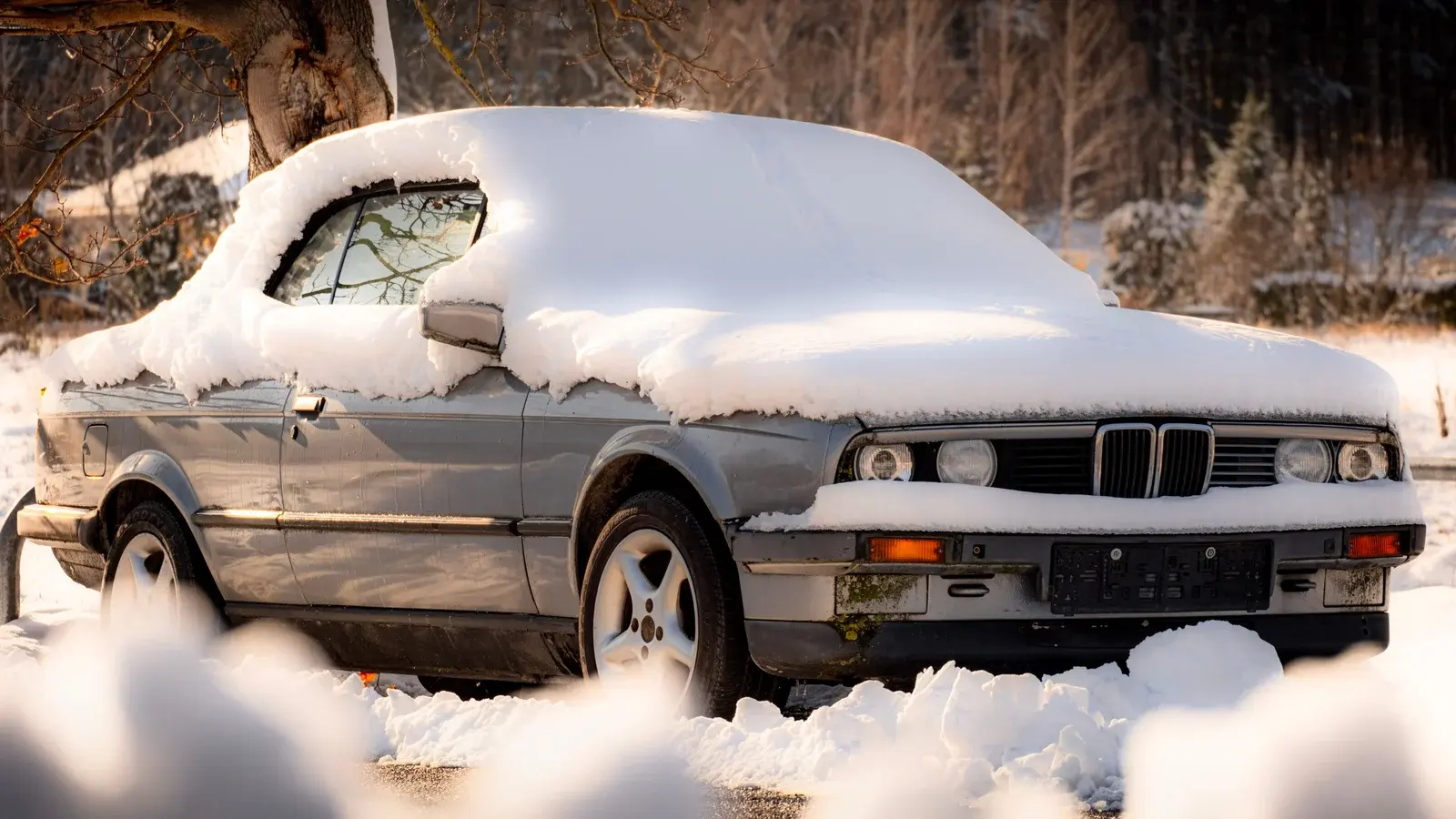
Mobile detailing in winter can proceed when the worker, site, products, equipment, and drying plan all pass their checks. Hold the job when a required condition fails or remains unknown. Change the site or service, then check the revised job.
A forecast above freezing cannot approve a wash or coating by itself. Check the conditions at the vehicle and through cleanup. Include the customer’s drying or cure period and your equipment storage afterward.
The stock photo shows a parked car in snow. It does not document a Detail Compass winter job or product test.
Record one job and its conditions
Write the exact service on the job ticket. List the vehicle surfaces, products, equipment models, location, and expected finish time. A wash, dry interior clean, and coating have different requirements.
- Record the hourly forecast, wind, precipitation, and overnight low. Check travel conditions and safe access at arrival.
- Measure air, panel, and product temperatures separately. Record the time, location, and measurement method. Follow the maker’s accepted method where specified.
- Copy application, ventilation, drying, cure, and storage requirements from the actual labels and manuals. A cure is the period when a coating develops its specified properties.
- Record the water supply, power source, runoff route, customer handover, and overnight equipment storage. Name who confirms each missing requirement.
Recheck conditions during work and when they change. Stop the affected step if its conditions no longer pass. Ask the maker when a limit or measurement method is unclear.
Protect the worker first
The Occupational Safety and Health Administration identifies wind and wetness as cold-stress risks. Cold stress occurs when the body loses heat faster than it can maintain safe warmth. Wet clothing can increase heat loss even above freezing.
Plan frequent short breaks in a warm, dry place. Have dry replacement clothing and a way to check workers for cold illness. Use clothing suited to the conditions and the product’s required protective equipment.
Stop work for uncontrollable shivering, confusion, loss of coordination, or other signs of cold illness. Move the affected person to a warm place. Call 911 for an emergency and follow the dispatcher’s instructions.
A garage needs safe power, ventilation, and access. Never run a combustion generator inside, including a garage with its door open. Do not idle the vehicle indoors for heat.
The Consumer Product Safety Commission recommends outdoor generator use at least 20 feet from homes and buildings. Direct exhaust away from windows, doors, and vents. Follow the generator manual for weather protection and electrical use.
Check the generator planning guide for power demand and placement. Hold the job if you cannot provide a safe worker and power plan.
Match the product’s actual limits
Use the instructions for each product in the proposed service. Check cleaners and preparation products as well as the final protection. A different product can have different temperature and drying limits.
Gtechniq’s Crystal Serum Light application sheet requires indoor application and 12 hours indoors afterward. It specifies an application temperature between 5°C and 25°C, equivalent to 41°F and 77°F. It also prohibits application in direct sunlight.
That range applies to this product’s instructions. The sheet does not identify a separate panel-temperature threshold. Record air, panel, and product temperatures, then ask Gtechniq which measurements must meet its limit.
Confirm the current instructions for your bottle and market. Do not transfer this range or indoor period to another coating. Hold application until the full preparation and product requirements are clear and achievable.
Control water and freezing paths
Check every place that wash water can reach. Include the work area, pavement slope, shared paths, drains, and the route used by the customer. Plan for conditions after you leave.
Ask the local stormwater authority where you may collect and dispose of wash water. Obtain site permission for the proposed method. Hold wet work if the runoff route or lawful disposal remains unknown.
Existing ice fails the access check. Water that can freeze on a walking or driving route fails the wet-work plan. Move to a verified site or postpone wet work when you cannot control that risk.
A rinseless method still uses liquid and has product limits. Check its runoff, surface suitability, and drying requirements separately. Do not assume a smaller water volume removes the freezing risk.
Allow drying, cure, and storage time
The job passes only when the required conditions last through drying and cure. Confirm where the vehicle stays and when the customer can use it. Record the product’s restrictions on water exposure and other aftercare.
For an interior extraction, verify drying conditions before adding water. Do not promise dry seats at handover without a workable drying plan. A dry interior scope can avoid extraction, but it still needs safe conditions and approved products.
Equipment protection continues after the job. The Kärcher K 4 Classic manual warns that frost can destroy an incompletely emptied machine. It requires frost-protected storage for that model and its accessories.
Use the exact manual for your machine’s shutdown and frost protection. Do not copy another model’s draining or run-dry procedure. Use antifreeze only when your equipment maker explicitly permits the product and method.
Check bottle storage limits too. An unheated van overnight needs its own storage check. Move products and equipment to an approved storage location when the van cannot meet their requirements.
Worked example: an outdoor coating (hypothetical)
All job conditions below are hypothetical. The proposed service is preparation and Crystal Serum Light application on a driveway. The customer expects to drive away that afternoon.
| Job input (hypothetical) | Result against the proposed service |
|---|---|
| Forecast during work: 8°C (46.4°F) | The forecast sits within the sourced application range. Actual required measurements and preparation conditions remain unverified. |
| Application location: outdoors | Fails the manufacturer’s indoor application requirement. |
| Indoor space after application: unavailable | Fails the required 12 hours indoors. |
| Overnight low: -2°C (28.4°F); runoff crosses a shared path | Fails the wet-work plan because the route can freeze. |
| Worker protection, safe power, and equipment storage: unconfirmed | Holds the job until these safety requirements are verified. |
The proposed job fails. An 8°C forecast does not resolve the indoor requirements or freezing route. Postpone the coating, or arrange another site and rerun every check.
A garage must pass permission, ventilation, power, runoff, temperature, and indoor-stay checks. A dry interior scope must pass its own worker, site, product, and equipment checks. Neither alternative receives approval from the failed coating plan.
Close out the job decision
Download the winter job checklist. Mark each check pass, fail, or unknown. Accept only the scope whose required checks all pass. Record any change or postponement on the quote.
Use mobile setup planning for the wider utility plan. Record winter setup, breaks, drying, and shutdown in your time log. Use those hours in your price sheet when you quote the revised service.
Sources
- Winter Weather: Cold Stress — Occupational Safety and Health Administration. Checked 2026-10-13. Wind and wetness increase cold-stress risk; frequent short warm dry breaks; worker monitoring; hypothermia signs and emergency response. Does not establish a safe detailing temperature.
- Crystal Serum Light: Application Information — Gtechniq Australia. Checked 2026-10-13. Indoor application, 12 hours indoors after application, no direct sunlight, and 5°C to 25°C application range. Used only for these narrow requirements; no separate panel threshold or universal coating limit.
- K 4 Classic operating manual: Frost protection — Kärcher. Checked 2026-10-13. This model’s frost-damage warning, model-specific emptying directions, and frost-protected storage of machine and accessories. An example manual, not instructions for other equipment or a product recommendation.
- Generators and Engine-Driven Tools — Consumer Product Safety Commission. Checked 2026-10-13. Portable generators outside well away from windows, doors, vents, and openings; never indoors or in a garage, including with the door open. Indoor engine exhaust hazard.
- CPSC Warns of Generator, Carbon Monoxide and Fire Hazards Ahead of Hurricane Season — Consumer Product Safety Commission. Checked 2026-10-13. May 27, 2026 safety guidance recommends outdoor generators at least 20 feet from homes and buildings, with exhaust away from windows, doors and vents. Follow manufacturer instructions for wet weather.

About Elena Mercer
Elena brings nine years of detailing experience to guides on equipment, pricing, and starting a business.
Meet Elena and read her guides